A Smile Replacement With Realistic Expectations
Tooth loss can affect much more than appearance. It may change which foods feel manageable, how clearly you speak, and whether you feel comfortable in social situations. Dentures offer a practical way to replace a missing smile and regain some day-to-day function.
It is important to understand that a removable denture is a smile replacement, not an apples-to-apples functional replacement for natural teeth. You must learn how to speak and eat with it. Full dentures can move during daily use, and adhesive is sometimes needed to help keep them in place. Some patients adapt and do very well; for others, the road to comfort and function can be challenging and require patience, practice, and adjustments.
Dr. Aaron Jeziorski will evaluate your mouth and explain these tradeoffs clearly. Your oral health, remaining teeth, bone, dexterity, goals, and budget all shape the recommendation. When a patient is a candidate and wants stronger stability and function, we will also discuss dental implants rather than assuming a traditional removable denture is the best endpoint.
Denture Options
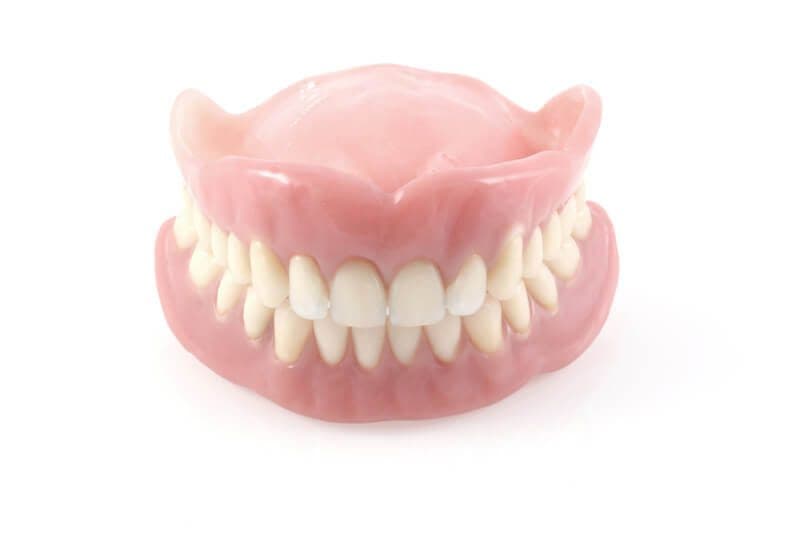
Full Dentures
A full denture replaces all teeth in the upper or lower arch. It rests on the gums and is removable for cleaning. Careful planning of tooth position, bite, and fit helps create a natural-looking smile, but it cannot recreate the stability or chewing force of natural teeth. Movement can occur, particularly with a lower denture, and some patients use denture adhesive for added retention.
Partial Dentures
A partial denture fills spaces when some healthy teeth remain. It uses a framework or other planned support to stay in position. Healthy remaining teeth can offer more support than the gums alone, but a partial is still removable and requires practice, daily cleaning, and ongoing care of the supporting teeth.
Implant-Supported Dentures and Fixed Teeth
Dental implants can provide an anchor that traditional dentures do not have. Some implant-supported designs remain removable for cleaning, while fixed full-arch teeth stay in place and are removed only by a dental professional. For eligible patients, implant support can reduce movement, improve confidence while eating and speaking, and lessen reliance on adhesive.
Implant treatment involves additional cost, healing time, and a surgical evaluation, so it is not the right fit for everyone. For patients who prioritize greater stability and more effective day-to-day function, however, it is often the first alternative worth exploring. Learn more about individual dental implants or compare a fixed full-arch All-on-4 approach with a removable overdenture.
Immediate Dentures
An immediate denture is made before the remaining teeth are removed and delivered at the extraction visit, so you are not without teeth while the gums heal. Because the tissues change shape during healing, the fit will evolve, and a reline or a second, more precise denture is often part of the plan. Follow the wearing and adjustment instructions given for your case rather than a general timetable.
Learning to Live With a Denture
A well-made denture still requires a learning period. Speaking may sound different at first, and chewing usually begins with smaller bites and softer foods while you practice using both sides of the mouth. Your tongue, lips, and cheek muscles also learn how to work around the appliance. This process is different for every patient and may take time.
Fit and retention depend on the shape of your gums and palate, the relationship between the upper and lower arches, and how the muscles of your mouth move. Even with careful planning, a removable denture may shift, and adhesive may be part of daily wear. Follow-up adjustments can address pressure spots and improve fit, but they do not turn a removable appliance into natural teeth or an implant-anchored restoration.
Appearance matters too. Tooth shade, size, and arrangement are chosen to suit your face and create a smile that feels like you. Our goal is to provide the best balance of appearance, comfort, function, maintenance, and cost that your mouth can support—and to be honest about the limits of each option before treatment begins.
Traditional Dentures or Dental Implants?
Both approaches replace missing teeth, but the experience is different. A traditional denture is removable, rests on the gums, and generally has a lower initial cost. It can restore the appearance of a smile, yet it requires an adaptation period, may limit some foods, and may need adhesive for added retention.
Dental implants are placed in the jaw to support replacement teeth. Depending on the treatment plan, the final teeth may be removable or fixed. Implant support typically offers greater stability for eating and speaking, but treatment requires appropriate health and bone, surgery, healing time, and a larger investment.
The best way to compare them is to decide what matters most to you: initial cost, stability, removability, maintenance, treatment time, and long-term function. Dr. Jeziorski will explain which options are possible in your case and where the benefits of implant treatment may justify the additional investment.
What to Expect
Evaluation and Choices
Dr. Jeziorski will examine your gums, remaining teeth, bite, bone, and existing dental work. If teeth need treatment or removal, that will be factored into the plan. You will compare what a removable denture can realistically provide with the added stability of implant-supported options before choosing.
Records and Design
Measurements, impressions or digital records, and bite information guide the shape of the denture. Tooth shade and arrangement are selected to complement your smile. Before the denture is finished, a try-in appointment lets you see the teeth set in wax and check the look, the bite, and how you speak, so changes can still be made easily.
Fitting and Adjustment
Your denture is tried in, checked, and adjusted. A new appliance will feel unfamiliar, and you will need to practice speaking and eating with it. Some soreness can occur while your mouth adapts. Follow-up visits allow us to address pressure areas, refine the fit, and discuss adhesive when appropriate.
Ongoing Care
Your mouth changes over time, so a denture that once fit well can loosen. Regular exams help protect the gums and remaining teeth and identify when an adjustment, repair, reline, replacement, or implant-supported alternative should be considered. Please do not repair or alter a denture at home with household glue or tools; a sore spot needs to be seen so we know exactly where the appliance is pressing. After delivery, our denture post-op care instructions cover the first days of wear.
Relines and Repairs
As the gums and bone change, the underside of a denture no longer matches the tissue. A reline adds new material to that surface so the existing denture fits snugly again, which is usually simpler and less costly than a replacement. Cracks, a chipped tooth, or a broken clasp can often be repaired, and in many cases we can complete a simple repair the same day so you are not left without your teeth. Bring the denture to every visit so the team can assess fit, wear, and hygiene access alongside the health of your mouth.
Why Choose Acacia Dental for Dentures?
- Personalized guidance from Dr. Aaron Jeziorski
- Honest expectations about comfort, chewing, speech, movement, and adhesive
- Full, partial, implant-supported, and fixed full-arch options discussed in one practice
- Attention to appearance, bite, comfort, and daily care
- Clear comparison of cost, treatment time, stability, and maintenance
- Financing and a dental loyalty program available
- A patient, judgment-free Tempe environment
Questions, Answered
Denture FAQs
Will Dentures Look Natural?
Modern dentures can be designed with tooth shape, shade, and arrangement suited to your features. The goal is a balanced smile that does not look generic.
How Long Does It Take to Get Used to Dentures?
Adjustment varies. You must learn how to speak and eat with a removable denture, and that process can be challenging. Soreness, extra saliva, changes in speech, and reduced chewing efficiency can occur early on. Some patients adapt well; others need more time and adjustments. Follow your instructions, practice gradually, and contact the office if a sore area persists.
Will I Need Denture Adhesive?
Possibly. The shape of your mouth and the type of denture affect retention, and some patients use adhesive to improve confidence and reduce movement. Adhesive should not be used to hide a painful or poorly fitting denture. If the appliance becomes loose or sore, schedule an evaluation so we can check whether an adjustment, reline, replacement, or implant-supported option makes more sense.
Can I Sleep in My Dentures?
Many removable denture wearers are advised to remove them for a period each day so oral tissues can rest and the appliance can be cleaned. Follow the specific instructions for your denture.
How Should I Clean My Denture?
Clean it daily with a soft brush and an appropriate non-abrasive product. Also clean your gums, tongue, palate, and any remaining teeth. We will show you how to care for your exact design.
Should I Consider Implants?
If stability, chewing function, and confidence are your priorities, implants are worth discussing. Implant-supported or fixed teeth can offer a more stable and effective replacement than a traditional removable denture for eligible patients. They also involve surgery, healing time, health and bone requirements, and a larger investment. A consultation can help you compare those benefits with the simplicity and lower initial cost of a removable denture.
What If My Denture Breaks?
Stop wearing it if the break creates a sharp edge, keep all the pieces, and call the office. Do not try to glue it. Many repairs can be completed in the office, often the same day, though a badly damaged denture may need to be sent out or replaced.
How Long Do Dentures Last?
There is no fixed lifespan. The acrylic and teeth wear gradually, and the jaw beneath keeps changing, so most dentures need periodic relines and eventually replacement. Regular exams help us tell you when adjustment is enough and when a new denture would serve you better.