A Stronger Way to Replace Missing Teeth
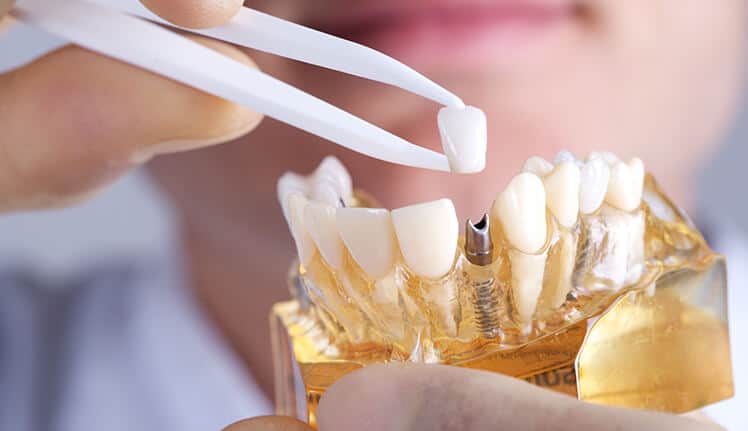
A dental implant is a small post placed in the jaw to support a replacement tooth or restoration. Because the implant acts as an artificial root, it can provide stability without relying on a removable appliance alone or requiring support from neighboring teeth in the same way as a traditional bridge.
Implants can be used in different ways. One implant may support a single crown, several implants may support a bridge, or implants may help secure a full-arch restoration. The right choice depends on the number and location of missing teeth, the health of your mouth, available bone, your overall health, and your goals.
At Acacia Dental, Dr. Aaron Jeziorski can evaluate your needs, explain the alternatives, and coordinate a treatment plan focused on long-term function and value. When most or all of the teeth in an arch are missing, that conversation usually includes dentures and fixed full-arch options such as All-on-4 as well.
Bridge, Implant, or Removable Partial?
A single missing tooth or a short span can usually be replaced in more than one way. No option is best for every patient, so the consultation compares how each choice affects the neighboring teeth, daily cleaning, treatment time, and cost.
Fixed Dental Bridge
A traditional bridge uses crowns on the teeth beside the space to hold a replacement tooth between them. Because those supporting teeth carry extra responsibility, their health matters as much as the gap itself. A bridge may make sense when the neighboring teeth already need crowns or when implant surgery is not preferred. Existing fillings, cracks, decay, gum condition, and root support all factor into whether those teeth are appropriate supports.
Dental Implant
An implant replaces the missing root without preparing the adjacent teeth, and the neighbors stay untouched. It does require surgical candidacy, adequate bone, and healing time. Once restored, it is cleaned much like a natural tooth.
Removable Partial Denture
A partial can replace several teeth at once with a lower initial cost and no surgery, but it rests on the gums and remaining teeth, is removed for cleaning, and may need periodic adjustment. The dentures page covers removable designs in more detail.
Benefits of Dental Implants
Stable Everyday Function
An implant-supported tooth is designed to stay in place while you speak and eat. That stability can make daily life feel more natural after tooth loss.
A Natural-Looking Result
The visible restoration is planned to blend with the surrounding smile. Shape, color, and bite all matter to a result that feels like it belongs.
Support for Long-Term Oral Health
Replacing a missing tooth helps restore chewing and fill the open space. Implant treatment can also avoid preparing neighboring teeth solely to support a conventional bridge when an implant is appropriate.
Flexible Replacement Options
Implants may support a single crown, a multi-tooth restoration, or a full arch. This flexibility allows the plan to match the extent of tooth loss.
What to Expect From Implant Treatment
Consultation and Planning
Dr. Jeziorski will examine your teeth and gums, review your health history, and use appropriate imaging to assess the proposed implant area. A cone beam CT scan shows the bone in three dimensions, including its height, width, and the position of nerves and sinuses, so the implant can be planned digitally before anything is done in the mouth. That plan can then be transferred to a surgical guide that directs the placement. You will discuss your goals, possible alternatives, expected timeline, and costs.
Preparing the Site
Some patients are ready for implant placement, while others need an extraction, healing time, or another preparatory step. If a failing tooth must first be removed, bone grafting material may be placed in the socket to help preserve the ridge for a future implant. Patients who have been missing teeth for years sometimes need grafting to rebuild bone that has thinned. These needs can only be determined after an evaluation.
Implant Placement and Healing
The implant is placed in the planned position. In selected cases the implant can be placed at the same visit a tooth is removed, which may shorten the overall timeline, but immediate placement depends on the condition of the socket and bone. The surrounding bone then needs time to heal and stabilize around it. A temporary tooth or appliance may be available in some situations so you are not left with a visible gap, but this varies by case. Do not chew on or load a healing implant unless the treating team has specifically directed you to.
Final Restoration
After the implant is ready, a custom crown, bridge, denture, or full-arch restoration is attached. Follow-up care helps us check the fit, bite, and health of the surrounding tissue.
Restoring the Implant Above the Gumline
The restoration is the visible, working part of implant treatment. Its design depends on how many teeth are missing and where.
Single Implant Crown
One implant supports one custom crown. Shape, contacts, bite, shade, and room for cleaning are all considered so the tooth blends in and stays easy to maintain.
Implant-Supported Bridge
When several teeth in a row are missing, two or more implants can support a connected bridge rather than placing an implant for every tooth. The number and position of implants are planned individually.
Full-Arch Restoration
Implants can also secure a complete arch of teeth, either as a removable overdenture that snaps onto the implants or as a fixed design such as All-on-4. Each has different cleaning routines and costs, which we will walk through with you.
Implants Placed Elsewhere
If your implant was placed by another office or you have moved to Tempe partway through treatment, Dr. Jeziorski can often complete the restoration. We will need records from the placing clinician, including the implant system and components used and any timing instructions, to confirm compatibility. An implant that is still healing should not be assumed ready for its final crown, and not every outside system can be restored, so an evaluation comes first.
Caring for the Tissue Around an Implant
An implant cannot get a cavity, but the gum and bone around it can still become inflamed if plaque collects. Daily brushing, cleaning between and beneath the restoration with the tools we show you, and regular professional checks help keep the surrounding tissue healthy. Contact the office if a restoration feels loose, chips, changes your bite, or traps food.
Why Choose Acacia Dental?
- Personal planning with Dr. Aaron Jeziorski
- Implant placement and restoration services available through the Tempe practice
- Sedation options for eligible patients
- Clear cost review before treatment begins
- Most dental insurance accepted, plus financing options and a loyalty program
- Care coordinated with your broader oral health needs
Questions, Answered
Dental Implant FAQs
Am I a Candidate for Dental Implants?
Many adults with missing teeth can consider implants, but candidacy depends on oral health, bone, medical history, tobacco use, medications, and other factors. A detailed exam and imaging are necessary.
Is Implant Treatment Painful?
The treatment area is numbed, and sedation may be discussed for eligible patients. Tenderness during early healing can vary. You will receive instructions for comfort, diet, hygiene, and when to call the office.
How Long Does the Process Take?
Timing depends on the number of implants, healing, and whether preparatory care is needed. Some plans take several months from the first visit to the final restoration. We will outline the anticipated phases for your case.
How Do I Care for an Implant?
Implants still require daily brushing, cleaning between teeth, and professional care. The restoration and surrounding gums should be checked regularly so concerns can be addressed early. A water flosser or small interdental brush is often helpful beneath an implant bridge or full-arch restoration.
Bridge or Implant — Which Is Right for Me?
A bridge is fixed, does not involve surgery, and may be sensible when the neighboring teeth already need crowns. An implant leaves the neighbors untouched and replaces the root itself, but it requires healthy bone, surgical candidacy, and healing time. Cost, timeline, and your medical history all play a part, and Dr. Jeziorski will explain the tradeoffs that apply to your actual teeth rather than presenting one as universally better.
What Do Dental Implants Cost?
Cost varies with the number of implants, type of restoration, imaging, sedation, and any preparatory treatment. Our team will provide a personalized estimate and review insurance and financing options after your evaluation.