A Fixed Approach to Full-Arch Tooth Replacement
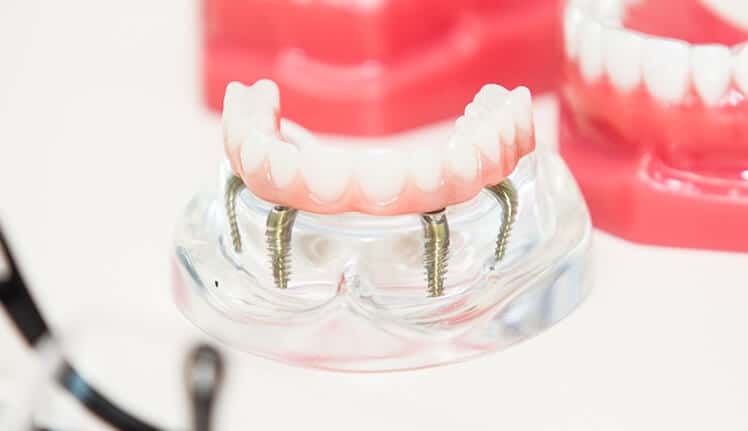
All-on-4 is a type of implant treatment that uses a planned set of dental implants to support a full row of replacement teeth. Instead of replacing each missing tooth with a separate implant, the implants work together as anchors for one connected restoration.
For eligible patients, this approach can provide more stability than a traditional removable denture. The restoration follows the dental arch without covering the roof of the mouth, and it is designed to remain in place rather than being taken out each night by the patient.
All-on-4 is not right for every person with tooth loss. Dr. Aaron Jeziorski will evaluate your teeth, gums, bone, bite, health history, and goals before recommending any full-arch plan. You will also review removable and other implant-supported alternatives so you can compare comfort, care, timing, and cost.
Comparing Your Full-Arch Options
When an entire arch needs replacement, there are three broad paths. Each is a reasonable choice for the right patient.
Traditional Denture
A conventional denture rests on the gums, is removed nightly for cleaning, and involves no surgery. It has the lowest initial cost, but it can shift while eating, an upper denture covers the palate, and the fit tends to loosen as the jaw changes over time.
Implant-Supported Removable Denture
A small number of dental implants can hold a removable overdenture in place with snap-style attachments. The denture is much steadier than a conventional one but still comes out for cleaning. It is a middle ground in cost and surgical involvement.
All-on-4 Fixed Restoration
The restoration is attached to the implants and stays in the mouth full time. It offers the most stability and the slimmest design, and only the dental team removes it for maintenance. It also involves the most planning, healing, and investment of the three.
Why Patients Consider All-on-4
Greater Stability
Implants anchor the restoration to the jaw, which can reduce the movement associated with some removable dentures. A secure fit may make speaking and eating feel more confident.
A Streamlined Full-Arch Plan
A small number of strategically planned implants support the full restoration. The exact number and placement depend on your anatomy and treatment plan rather than a fixed promise. "Four" describes the concept of tilting the rear implants to make the most of available bone; the final count is decided per patient, and some arches are better served by five or six.
No Palatal Plate
An upper implant-supported fixed restoration does not require the same roof-of-the-mouth coverage as a conventional full denture. Many patients value the less bulky design.
A Natural-Looking Smile
The visible teeth are planned as one coordinated restoration. Shape, color, tooth position, facial support, and bite are considered together.
What to Expect
Comprehensive Evaluation
Your consultation includes a dental examination, review of your medical history, and appropriate imaging. A cone beam CT scan lets Dr. Jeziorski measure bone volume in three dimensions and locate nerves and sinuses, which is how implant positions and angles are chosen before surgery. He will assess whether implant support is realistic and whether any health or dental concern needs attention first.
Personalized Planning
The plan identifies the proposed implant positions, restoration type, sedation considerations, treatment phases, and expected fees. If remaining teeth need removal or bone care is needed, those steps will be explained before treatment begins. Because surgery day can be lengthy, we also settle on a comfort plan: laughing gas, oral sedation, or IV sedation, which Dr. Jeziorski is certified to provide, for patients whose health history allows it.
Implant and Temporary Phase
Implants are placed according to the plan. Some eligible patients may receive a temporary fixed restoration during the healing phase, while others need a different temporary solution. This interim prosthesis is lighter than the final one and is designed to protect the implants while they integrate; it is not meant for hard or chewy foods. The ability to attach teeth right away depends on implant stability and clinical findings.
Healing and Final Restoration
The implants need time to stabilize in the bone. After healing and follow-up evaluation, the final restoration is designed, fitted, and adjusted for your bite. Ongoing professional and home care remain essential.
Why Choose Acacia Dental?
- Personal full-arch planning with Dr. Aaron Jeziorski
- Implant, restorative, and sedation services coordinated through one Tempe practice
- A clear comparison of fixed and removable alternatives
- Written discussion of treatment stages and expected costs
- Most dental insurance accepted, with financing options available
- A calm, respectful approach for patients facing extensive dental needs
Planning for the Cost
Full-arch treatment is one of the larger investments in dentistry, and we would rather talk about it openly than leave you guessing. After the evaluation you will receive an itemized estimate that separates imaging, extractions, implants, the interim prosthesis, the final restoration, and sedation. Dental insurance rarely covers the entire plan, but it may contribute to parts of it, and our team will check your benefits. Third-party financing and our in-house loyalty program are also available; the financial page explains those options. Treatment can often be staged so costs are spread across the phases rather than paid all at once.
Questions, Answered
All-on-4 FAQs
Is All-on-4 the Same as a Denture?
Both replace a full row of teeth, but All-on-4 refers to a restoration supported by implants. A fixed version stays attached for daily use and is removed professionally when needed, while a conventional denture is removed by the patient.
Can I Get Teeth the Same Day?
Some eligible patients can receive a temporary fixed restoration when implants are placed. This is not guaranteed. Bone quality, implant stability, health, and the treatment plan determine whether immediate loading is appropriate.
How Long Does Treatment Take?
Treatment includes planning, placement, healing, and the final restoration. The total timeline varies with your starting condition and whether extractions or other preparation are needed.
Is All-on-4 Always Exactly Four Implants?
No. Four is the starting concept, not a rule. The CT scan and your bone determine the final number, and Dr. Jeziorski may recommend additional implants for an upper arch or where the bone is softer. You will know the planned count before treatment begins.
How Do I Clean an All-on-4 Restoration?
You will clean around and beneath the restoration with tools recommended for your design. Daily plaque removal and regular professional visits help protect the gums, implants, and restoration.
How Much Does All-on-4 Cost?
Cost depends on the arch being treated, implant and restoration design, imaging, sedation, extractions, preparatory care, and materials. After your evaluation, we will provide an individualized estimate and discuss insurance and financing.